The Montserrat Natural Park: The Mountain Itself
The abbey gets the photographs and the rock is why it is there. Montserrat is a mass of conglomerate weathered into rounded towers, protected as a natural park, with paths running out from the monastery in every direction. Most day tours to Montserrat from Barcelona never leave the square, which is what makes the walking ones worth finding.
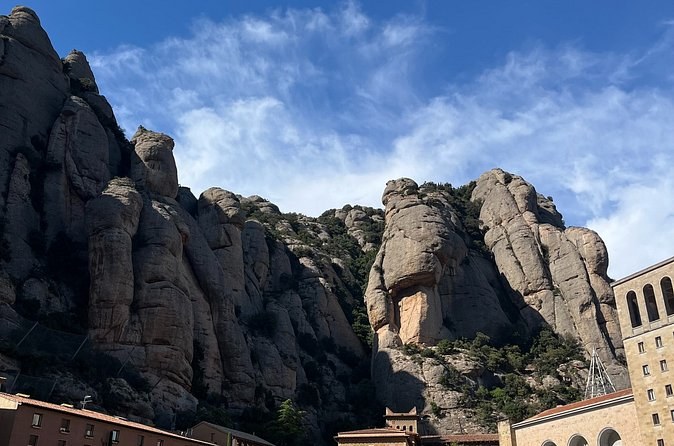
Pebbles in a natural cement: what Montserrat is made of
The visitor service describes the rock plainly: pebbles bound together by a natural cement of sand and clay. It is conglomerate, laid down as river gravels and lifted, and it weathers quite unlike limestone or granite.
That is the whole explanation for the skyline. Wind and rain have, in the same source's words, shaped the mountain into needles and monoliths of strange and varied form. Because the pebbles erode unevenly, no two towers come out the same, and the ridge reads as a row of separate stones rather than a single cliff.
Sant Jeroni, 1,236 metres
The highest point of the massif stands at 1,236 metres, against 712 for the monastery. From the top the view runs across the Catalan plain and, on a clear day, a very long way further. It is the one place on the mountain where the scale of the thing finally registers.
The monastery walk: 7 km, two and a half hours
The Patronat publishes the route from the monastery to the summit as seven kilometres and about two and a half hours, which is 524 metres of climbing. That is a half day on its own, both ways, and it is the reason no guided departure from Barcelona reaches the top.
| Route | Distance | Time | What it gives you |
|---|---|---|---|
| Monastery to Sant Jeroni | 7 km | About 2 h 30 each way | 524 m of ascent; the summit of the massif |
| Monastery to the Creu de Sant Miquel | About 1 km | 30 to 45 minutes | The classic viewpoint back at the abbey |
| Monastery down to the Santa Cova | About 1 km | 30 minutes down, longer up | The sculpted path; the funicular that serves it is closed |
| Sant Joan funicular, then the ridge paths | Varies | An hour upwards | The funicular removes most of the climbing |
The Sant Joan funicular and what it saves you
Sant Joan climbs from beside the monastery towards the ridge and takes the steepest part of the ascent off your legs. It costs €11.40 one way and €17.50 return. Ride up, walk the ridge paths, then walk down: that is the shape the walking days here are built on.
Santa Cova, and the funicular that is shut
The Santa Cova is the grotto below the monastery where, by tradition, the image was found. A sculpted path drops to it and it is open 10:30 to 17:00.
The hermitages along the ridge
Scattered across the massif are the remains of hermitages, small cells where monks lived alone on the rock. They are why paths exist here at all: the network you walk was made by people going between them, centuries before anybody thought of a funicular.
Walking safely on conglomerate
The rock is sound when dry and slick when wet, and the paths carry loose gravel where the cement has weathered out. The operators who run walks here publish their own conditions and they are worth reading as terrain notes rather than as small print: moderate fitness, no heart problems, hiking or sports shoes, and on one departure walking poles and bottled water are handed out at the van.
The two published route lengths give you the scale. One walking departure covers 5.5 kilometres with 300 metres of climbing; the other does three kilometres, all downhill, using the funicular or the cable car to gain the height first. Neither is a scramble, and neither is a stroll.
Walking it without a guide
Entirely possible, and free. The paths are signed, the park publishes the routes, and the rock is grippy when dry. What you need is time: the last cremallera down leaves between 18:15 and 20:15 depending on the season, and missing it is a taxi you did not budget for.
Want the mountain rather than the square?
Some tours here put a guided walk in the natural park inside the fare, with the group capped at eight or sixteen.
Guided walks that include the climb
| Tour | Group | Price | Book |
|---|---|---|---|
| Montserrat Hiking Experience & Monastery Premium Small Group Tour | Max 8 guests | From $85 per person | Check Availability |
| Montserrat Half-Day Funicular & Gentle Walk Small Group (Max 8) | Max 8 guests | From $84 per person | Check Availability |
| Montserrat Half Day with Cable Car and Easy Hike from Barcelona | Max 16 guests | From $87 per person | Check Availability |
See all half-day Montserrat tours
Frequently asked about the mountain
How high is Montserrat?
What is Montserrat made of?
Can I climb Sant Jeroni in a day?
What is the Santa Cova?
What should I wear on the walks?
How much are the funiculars on the mountain?
Next: what fills the rest of a day is on things to do at Montserrat, the seasons on the weather page, and every departure on Montserrat Barcelona Tours.